You have 0 items in your cart. View Cart | Go to Checkout

Fun 'n Interesting Facts

Tidal Waves
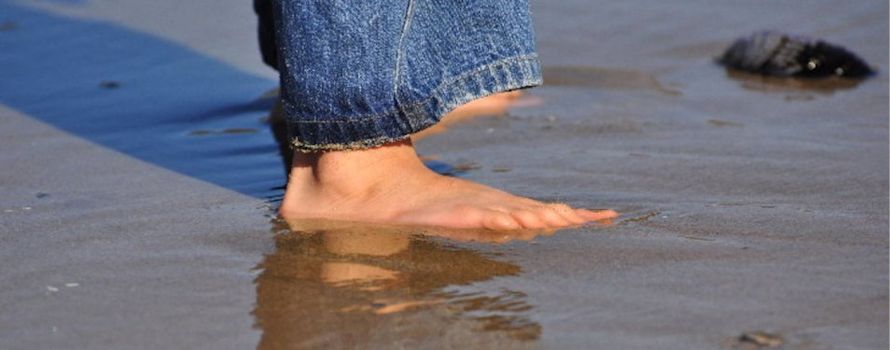
When a tidal wave is about to hit a coastline, the water first recedes all the way to the horizon. If a person were foolish enough to do so, he could walk out several miles before the wave came smashing ashore.
Tidal waves move faster than any wheeled vehicle on earth. On the open seas they sometimes approach speeds of more than 500 nautical miles per hour!

How many shipwrecks?
According to the U.S. Hydrographic Office about 2,172 ships have been wrecked at sea in the last 100 years.

Pacific Ocean size
The Pacific Ocean encloses an area larger than all the land surfaces of the earth put together.

What if Antarctica melts?
If the ice flows of Antarctica were to melt, they would raise the ocean level by 240 feet, submerging 1/4 of the world.

Removing a fishhook
When a fishhook is embedded in a non-critical area, such as a finger, press down on the shank (stem) of the hook until the barbed end pushes out through the skin and is free, making a slight incision with a knife at the point where the tip emerges to make the process easier. Then cut off the barbed end of the hook with pliers or clippers and slide out the shaft, washing the wound with soap and water before bandaging it.

Using a watch as a compass
If you have the correct local time and point your watch at the sun’s center, this method will work.
Hold your watch up horizontally at noontime with it’s hands pointing at the sun, and they will be pointing directly true South, the hour 6 North, the hour 9 East, and the hour 3 West.
When it is before or after noon, point the hour hand to the sun, and South will lie at a point midway between the center of 12 and the hour hand. Thus if it is 10 am, the hour 11 will point South; if it is 6 pm, the hour 3 will point South, and so forth.

Speed in Knots
The speed of a vessel at sea is reckoned by knots, each knot being equal to a nautical mile (6,076 feet), which is slightly longer than a mile measured on land (5,280 feet). Six nautical or geographical miles are about equal to seven statute English miles, so that a ship making 12 “knots” an hour is actually traveling at the rate of 14 statue miles per hour. The following explanation from an old training manual tells how a ship’s speed came to be measured in knots:
“ The speed of a ship is ascertained by means of the log-line, which is a cord knotted at equal distances of 51 feet; 120 of these lengths are equal to a geographical mile. At one end of this line the ‘log’, which is a piece of flat, light wood, generally triagular in shape, weighted along one edge, is attached, much in the same way as a boy fastens his kite to the string, so that it floats vertically, with it’s flat surface presented to the ship. When thrown overboard, with the line allowed to pass over the stern freely, the log meets with so little resistance that theoretically it remains stationary. The number of knots in the cord being equal to the number of half minutes in an hour, it follows that as many ‘knots’ of the line as pass over the stern of the vessel every half minute, so many geographical miles or knots are being ‘made’ by the ship in an hour.”

Sad Truths
-An empty beer can was the first thing Admiral R.J. Galanson saw on the ocean floor when he descended half a mile beneath the Pacific in a Navy deep-submersible craft.

-Billions of pounds of potentially harmful pollutants are dumped into the world’s oceans yearly. The “New York Bight,” a 50,000 square kilometer area along the New York-New Jersey coast and extending 190 kilometers seaward to the edge of the continental shelf, was created by a municipal sewage sludge-dumping policy. In one year, New York dumped so much sludge that if the same sewage had been placed in the city’s 34,000 square meter Central Park, it would have covered the park to a height of 8 feet!

-Environmental protection laws are nothing new. Since 1899 it has been a crime to discharge industrial wastes into water under the U.S. Refuse Act.

-Thor Heyerdahl and his fellow voyagers tried not to dip their toothbrushes in the water while drifting across the mid-Atlantic in 1971, so visibly polluted was the water in mid-ocean.

Little Known Facts about Columbus
Christopher Columbus was never known by that name in his lifetime; he was called by his real name, Cristoforo Colombo.
Columbus was paid 2,000 Spanish maravedis a month, during the voyage on which he discovered America, or $59.28 in today's money for his two-month voyage.
The first black to see America was not a slave but Pedro Alonzo Nino (1470-1524), navigator of the Nina when Columbus sailed to the New World.
Columbus began the trans-Atlantic slave trade when he shipped 10 chained Arawak men and women back to Spain on his first trip to the New World. “From here, in the name of the Blessed Trinity,” he wrote, “we can send all the slaves that can be sold.”
With his men desperate for food on his fourth voyage to the New World, Columbus tried to bargain with Jamaican natives, but they refused to supply him. Columbus, however, remembered reading in his Zacuto Almanac that there would be a lunar eclipse on February 29, 1504, and threatened to use magic powers to extinguish the moon if the natives didn’t comply. The natives scoffed until the eclipse occurred: then they promised him all the food he needed if he would make the moon shine again.


Navigation Station


Online Payments


"Ship's Log"

interesting facts, history, trivia

about mariners, the sea and all-other-kinda-fun-thang!

Japanese Glass Fishing Floats

An enthusiastic collector, customer of ours, provided the following information:

The fishing float you picked out for me will be my first rolling pin! I'm finding my own niche as far as the glass floats that I personally think are cool. The ones you have, Japanese floats, in my opinion, have the most character. Yours all appear to be "working glass floats" which means they were beach-combed because they were once in use on a Japanese fishing net. Lots of replicas, known to the glass float world as "curios" have been on the market for decades which makes it tough for collectors who haven't done much research. Your basket of authentic glass floats caught my eye and I must say your prices are generous! There are a hand full of master collectors and beachcombers that have collections that are absolutely beyond words. The simplicity of these floats, along with the uniqueness of each one is a collector's dream. There's a book I recommend you buy called "Glass Ball Marks" by Walt Pich. It has 400 glass ball mark identification symbols. These symbols, to buyers and sellers, are called WP identification numbers (short for Walt Pich). Walt Pich has other books, and is pretty much the grandfather of glass float collecting.

Rolling pin floats are rarer, and I read somewhere that around 20% of ball glass floats are marked, and even less for rolling pin glass floats. However, the color, size, marking, condition, manufacturing, origin, and age all play into what a glass float is worth. In the collecting world, It's hard to price a lot of these items, which makes personal preference a huge factor. For example: I like green (the most common color), bubbles and clarity. Another collector may like markings, large floats and sand blasted. Another collector may like Norwegian floats (the first country to manufacture a common float in the 1800's) and not care about Japanese floats at all. It's still an evolving collecting arena out there!

Washington state, where you are, is one of the 3 best places to beach-comb these floats. The east coast is pretty much a bust for finding any floats what-so-ever, and since Japan used these floats for so many years, Washington, Oregon and Alaska beaches ended up with a lot of the authentic floats due to the Pacific Ocean currents. The islands of and near and around Japan will also end up with these floats around their shoreline (so will Hawaii to an extent). These floats can get caught for years in common circular ocean currents, but if a storm knocks them free when with big enough winds they will eventually reach American coastlines. After doing a lot of research, it seems as though the Oregon coast has been very well covered by beach-combers. I haven't seen much about the Washington coast being depleated, however, and it looks like Alaska is the best place to beach-comb these floats in the current year 2010.


Nautical Brass Bells

All our brass bells are polished cast brass and include a basic natural fiber rope lanyard attached to the solid brass clapper.
The medium to large brass bells are great for hanging up and calling the troops in ~ popular as a bell to ring in the sales office, bring a meeting to order, or for that golf course bell in that obscure hole not visible by on coming players!
We offer an excellent price for all sizes, weights and tones. Speaking of tones, we have provided sound bytes to give you an indication of how the bell tone sounds relative to one another. But of course nothing gives you the true sound of that crystal clear crack of a solid brass bell except to experience it live. Imagine the clarity and authority these command when rung!
A brass bell would be a very distinguishing gift for someone's farm or country kitchen, on your yacht, an addition to your collection, your child's teacher, or how about ringing from the house to call your swimmers, fisherman and boaters back to shore?!
Ring them at your next convention or sales meeting.

Procedures for using a ship's bell under sail:
The ship's clock strikes in a half-hour sequence based on the four-hour ship's watch system. The end of the first half hour is marked by one bell, the end of the first hour is two bells, the end of the first 1-1/2 hours is three bells, etc. Eight bells mark the end of a four-hour watch. Eight bells are struck six times in a 24-hour period: at noon, 4 p.m., 8 p.m., midnight, 4 a.m. and 8 a.m. Completing a watch with no incidents to report was accompanied with the call of "Eight bells and all is well."

Brass Barometers

The word barometer is derived from the Greek word "baros", meaning weight, and the Greek word "metron", meaning measure. The barometer is an instrument used to measure air pressure. In early 17th century Italy there were many Italian scientist independently working on the principal's of a vacuum and air pressure, however, it was a young scientist by the name of Evangelista Torricelli that first detailed his experiments with what became known as the barometer. The barometer utilizes the principal of a vacuum to measure the weight of the air. For a simple explanation of a vacuum, just consider your everyday use of a straw to sip water.

If you were strong enough to suck all the air out of the top of a very long glass straw, to create a perfect vacuum at the top, the water would immediately rise to almost 35 feet within this long straw, as the average outside air pressure, at sea level, could support 35 feet of water! The first publicized working barometer, dating back to 1643, has been credited to Evangelista Torricelli. Torricelli had been associated with, and studied the writings of Galileo, just before Galileo's untimely death in 1642, and used those findings to help him construct the first barometer, which, at first used water to measure the air pressure.

This information provided by: www.barometer.ws/history.html

Exotic Kelp Art Decor

Bull kelp, also known as bullwhip kelp due to its long stipe which resembles a whip, is a common brown seaweed found along the northwestern coast of the United States. Often one can see children snapping their playmates or their parents with a shorter piece of it, or dogs dragging it along for a ways.

Bullwhip Kelp How bull kelp is formed is fascinating. Underwater, a cable-like formation known as a ‘holdfast’ anchors the bull kelp to rocks, in the sub tidal zone and to a depth of several fathoms. The Bull whip kelp grows in large fields or beds far out from shore and far deeper than any tide lays bare. It’s buoyant, stem like stipe and bladder or float (the round bulb at the top, which are made into rattles) filled with CO2 bring the long, flat fronds growing out of the bladder closer to the sunlight, so that they float on or close to the water’s surface. These fronds gather sunlight for photosynthesis and also carry the spores that will later become new kelp plants. Bull kelp can attain a length of greater than 100 feet over a year’s span, though typically it grows to length of 18-50 feet in about six months, at which time storms dislodge most of the plants.
Once dislodged from its ocean home, waves bring the kelp to the beach. The process the kelp goes through from that point determines whether it will be useful as a kelp creation, and what purpose it will best serve. The kelp gets pushed up on the shore, and may get drawn back into the sea and pushed back up on the beach numerous times before it finally rests and dries. It requires the salt, sun, and wind to achieve the proper curing. Also, parasites in the form of bugs and mold play a large part in the beauty of the finished product. Bullwhip kelp hanging to dry

This product cannot be mass-produced, and your special kelp piece will be a one-of-a-kind. And because they are one-of-a-kind, all photos of actual kelp portions, are meant to be representative for purposes of shape and overall design.

These kelp pieces are made by hand, from gathering the kelp on the beach, to scrubbing, shaping, & designing the beautiful products you see here.

Kelp is very durable, non-flammable, and will last many, many years with proper treatment. I feel that these products will lend a wonderful energy to your living space.


How to Name a Ship
Many ship names have been used scores of times . The revolutionary British Dreadnaught of 1906, for example, was the eighth ship in the English naval history to bear that name, otd others have used it since. There has never been any universal system for naming ships. While the British preferred frightening names like the Invincible, Devastation, Shark, and Hyena, for their warships, the Japanese have always like the romantic names such as the Shiranuhi (“Phosphorescent Foam”) and Kasumi (“Mist of Flowers”). No rigid logic seems ever to have been at work here, although the U.S. Navy did institute a comprehensive system during World War II, prescribing that the following classes of ships be named in the following manner (don’t forget, however, that sailors on the strictest naval ships often called them by entirely different names – the Missouri for example, was sometimes called the Misery, the Brooklyn, and the Teakettle; while the Salt Lake City was often called the Swayback Marie!)

Aircraft carriers. After battles, people associated with aviation, and great American ships.
Ammunitions ships. For volcanoes; also with names suggesting fire and explosives.
Amphibious force flagships. After U. S. mountains.
Battleships. For states of the union.
Cargo ships. For astronomical bodies or U. S. counties.
Cruisers. For U. S. cities, territories, and capitals of U.S. territories.
Destroyers. After dead persons associated with the Navy and Marines.
Destroyer escorts. In honor of “personnel of the Navy, Marine Corps, and Coast Guard killed by enemy action in World War II).”
Harbor tugs. After trees, or Indian chiefs and “other noted Indians.”
Hospital ships. Named with “synonyms for kindness” or “other logical and euphonious words.”
Landing ships. For places of historical interest.
Minelayers. After former navy monitors or with “logical and euphonious words.”
Minesweepers. Names of birds or with “logical and euphonious words.”
Net Tenders. After trees, or Indian chiefs and “other noted Indians.”
Ocean tugs. For Indian tribes.
Provision store ships. For astronomical bodies.
Salvage ships. With “names descriptive of their functions.”
Seaplane tenders. With the names of U.S. straits, bays, and inlets.
Submarines. After fish and other sea life.
Submarine tenders. With the names of pioneers in submarine development and characters in mythology.
Tankers. With Indian names of rivers.
Transports for carrying wounded. In honor of dead Navy surgeon generals.


U.S. Navy Mark V Diving Helmet Facts
SAFETY WARNING: Never, ever dive a helmet unless you are absolutely sure it is genuine  and in proper working condition. Replica helmets are not designed or built for actual use.

What is a U.S. Navy Mark V Diving Helmet?
At the turn of the 20th century the U.S. Navy didn't have a standardized system for diving. In 1912 U.S. Navy gunner G. D. Stillson submitted a report criticizing the way the Navy conducted its diving program. The Navy agreed and a group was formed in 1914 to standardize equipment and procedures. The Spitcock and Exhaust Valve are on the same side. The breastplate resembles a Commercial breastplate in the shape of the collar strap. In the 1916 U.S. Navy Diving Manual the Mark V Helmet first appears in its adopted form. The breastplate shape is unique to the Mark V being narrow across the shoulders and with a deep drop front and back. The spitcock was moved to the left of the door, and guards specific to the Mark V were added.

All U.S. Navy Mark V helmets conform to a standard set of plans issued by the Bureau of Ships. Helmet shell, breastplate, all fittings and attachments are designed so regardless of the manufacturer all equipment would be compatible. Some small variances do occur between manufacturers but do not effect interchangeability.

All Mark Vs are diving helmets, but not all diving helmets are Mark Vs. Just as an auto maker builds car models to fit particular customer needs, different models of diving helmets have evolved to suit divers needs. Some helmet models are further modified to a particular divers requirements or the requirements of a specific job.

One of the best and best known diving helmets in the world is the US Navy Mark V. Until about 1912 there was hardly any serious (deep) diving activity in the US Navy. Commercial Morse and Schrader helmets were used. US Navy gunner George D. Stillson wrote a letter to the Bureau of Construction and Repair (now the Bureau of Ships) in which he complained about the Navy's equipment and diving techniques. He suggested to check the practicability of Haldane's stage method of decompression and to improve the standard Navy diving gear to permit deeper dives. The Bureau gave Stillson the assignment. It took several years and the help of a team of military and commercial diving experts to complete the heavy task. The design of the new diving helmet was based on commercial Morse and Schrader helmets of that time and the team also tested Siebe and Draeger equipment. Extensive tests were conducted in diving tanks ashore and later from the U.S.S. Walke in Long Island Sound. In 1915 Stillson reported to the bureau in the Report on Deep diving tests. It contained drawings and descriptions of the precursor of the MkV and of a lot of other navy diving equipment. Stillson layed the foundations for professional diving in the US Navy. The helmet had a top view port to provide the diver with an upward view. The front view port, called the faceplate, was hinged. Like this, no tender could incidently drop a faceplate overboard ! On the commercial helmets they tested, the exhaust was at the rear of the helmet. This was a good spot: air bubbles would not block the divers' view. However, it was sometimes hard to operate the handle at the back of the helmet. So, the exhaust was moved to the right front side of the helmet and an external "banana" tube was applied to exhaust the air at the rear of the bonnet. Conventional 3 light helmets had air channels to prevent the windows from steaming up. On a 4 light helmet this was a bit of a problem: 2 side view ports and the top view port got an airchannel. A spitcock was put on the bonnet between the faceplate and the left view port so the diver could suck in some water and spit it against the inside of the faceplate in case it would steam up. The spitcock could also be used to "fine tune" the buoyancy.

Mayflower Quiz
What do you know about the Mayflower, that doughty little barque that sailed the Pilgrims to America. Few mariners will be able to answer all the following questions:
1. The Mayflower had previously been engaged in (a) slave trade (b) the wine trade (c) the lumber trade (d) the Dutch Royal Navy
2. She weighed (a) 180 tons (b) 360 tons (c) 90 tons (d) 466 tons
3. Her Captain’s name was (a) John Smith (b) Brett Hallstein (c) Christopher Jones (d) Erik Hendrickson
4. In addition to the Pilgrims, she carried a cargo that included (a) cartons of beads (b) another small vessel called a shallop (c) Bibles (d) muskets
5. Her first stop in America was in (a) Boston (b) Salt Lake City (c) New York (d) Providence
6. She started out with another ship called the (a) Seahorse (b) Goodhope (c) Wangen-stein (d) Speedwell
7. The two ships put back to port (a) once (b) twice (c) thrice (d) not at all before the Mayflower sailed alone.
8. The voyage took (a) 67 days (b) one year (c) 18 months (d) three weeks
9. When she returned to England the next spring how many passengers returned with her? (a) 10 (b) 0 (c) 25 (d) 100
10. Two years after the voyage her hulk was sold for (a) 100 Pounds (b) $2000 (c) $9.99 (d) 500 Pounds

Answers: (1) b (2) a (3) c (4) b (5) d (6) d (7) b (8) a (9) b (10) a

History of Lighthouses
In early time people set fires at the edge of the water to warn boats of dangerous rocks and shores. The Egyptians were the first people to build lighthouses to use light to guide ships. In Egypt in 283 the Egyptians completed the tallest lighthouse ever built. It guided ships for over 1,500 years and stood 900 feet tall. Lighthouses were also constructed by the Phoenicians, Greeks, and the Romans. by Ryanne Read More Here


History of Steering Orders

In 1912, steering orders were given in accordance with a very old convention, which was not phased out on British ships until January 1st, 1933. (Sir James Bisset). (The date of this varied from nation to nation and the references seem inconsistent, but all were after 1912. A Royal Navy Manual dated 1937 says the new orders were "recent"). Contrary to what some, including Walter Lord, have written, this had nothing to do with desiring to conform with motor car practice. In those days, few people owned cars and naval ratings certainly did not. It was done simply to bring the order into agreement with the action and its result.

Early western ships were steered with a steering oar and later with a rudder moved by a tiller, just as in small sailing boats today. In both these systems, to turn to port, you push the tiller or oar to starboard. I have had a lot of fun trying to teach people used to car wheels to steer with a tiller. Their reactions are often the reverse of what is needed, though some are born with a feel for it. Conversely, I find it hard to steer a yacht with a wheel, seldom having done so.

In those distant days, the officers in charge took to giving steering orders in terms of the tiller, not the direction of the turn. Thus, "Hard-a-starboard" meant "Push the tiller or steering oar as far as you can to starboard" and the ship turned hard to port.

A whipstaff on the replica of Duyfken, the first European ship to visit Australia, in 6006. On Duyfken, the helmsman is sheltered by a hood and can only see forward.
From around 1450, a new means of steering was often used. The deck had become so high above the rudder that the helmsman needed a remote way of turning the tiller, if he was to be on the deck and able to see the sails. The answer was the whipstaff, which was a stout piece of timber, passing through a hole in the deck to a pivot and from there to the end of the tiller. A mechanical advantage of about 4 to 1 was obtained at the cost of limited rudder movement. The helmsman stood with the whipstaff roughly vertical in front of or beside him. Americans can find a fine example of this on Mayflower. The whipstaff was pushed in the direction in which the ship was to turn. The orders continued to be given with reference to the tiller. With some practice, helmsmen got used to this.

By the early eighteenth century, the ship's wheel was introduced on larger ships. Like the whipstaff, the wheel was pushed in the direction in which the ship was to turn. Again the orders remained unchanged.

There was some reason for this long adherence to what seems an illogical tradition. Until relatively recent times, naval seaman in particular had to steer vessels by at least five steering systems, not counting the obsolete whipstaff. Large ships had wheels. Small power and sailing boats had tillers and some boats, such as whale boats and some lifeboats, had steering oars. Rowing boats were often steered by a steering yoke controlled by short lengths of rope. In an emergency, large ships were sometimes steered by tackles attached to the tiller below decks. At a pinch, Titanic could be steered by connecting her warping capstans to the tiller. It simplified things if the officer in charge gave all orders with reference to a real or hypothetical tiller. It was part of a seaman's skills to react correctly to the order.

The lower end of the whipstaff is connected to the end of the tiller by a device that allows it to swing through an arc, while turning the tiller up to 15 degrees each way.
On Titanic, the wheel worked just as wheels had done for two hundred years. The wheel was turned in the direction in which you wanted to turn. The old orders were still in use and the scene in the movie is perfectly correct. Some people have dreamed up strange theories involving a wheel that worked backwards, or Murdoch or Hichens getting confused under pressure, but this is pure twaddle, as any real seaman knows. Harland and Wolff were not in the habit of building ships with trick steering wheels and neither was anybody else.

This information provided by:
All at Sea with Dave Gittins - http://users.senet.com.au/~gittins/wheel.html

Ship's Figureheads

From the earliest times the stems of vessels have been decorated with some form of figurehead. Such adornments have fallen out of general use, but until comparatively recently the seaman attached great importance to the figurehead of his ship.

Ship's figureheads are something of a craze. There are many people who delight in the picturesque features of figureheads and their connection with the past, but few people realize how much they meant to the old-time sailor and what an important feature the figurehead was in sea life.

It was a wise captain who knew when to tauten up his men by referring to the figurehead, but it required courage for a frigate captain to make this speech in the late eighteenth century:" Now, I tell you what it is, my lads. Unless you are off those yards and the sails are hoisted again before any ship in the squadron, by the Lord Harry, I'll paint the figurehead black! " The threat gave his ship the best time in the exercises.

Not only had the figurehead a sentimental significance for the crew, but it was also an object of superstition. HMS Atlas, a fine three-decker, was launched during the War of American Independence in 1782. Because of an error in design, the figurehead, representing Atlas supporting the World on his shoulders, was too high to permit the bowsprit to be fitted, so part of the globe had to be cut away. That part included the American colonies, and the sailors regarded its removal as an omen. In comparatively modern days a sailing ship that generally ran regularly to Sydney was ordered to Brisbane for one voyage, and when passing Sydney met with a succession of baffling head winds. Old shellbacks in the crew carefully blindfolded the figurehead with tarpaulin until they were safely past their usual port.

The origin of the figurehead is one of the many nautical mysteries, but it goes back far in to the past. It seems to have been founded in a mixed desire to conciliate a deity and to terrify an enemy; the idea of decoration probably came far later.

Probably the earliest known form of figurehead is found in the prehistoric ship of ancient Egypt. The ends of Egyptian ships came up in a graceful curve, taking the form of a lotus stem- perhaps the origin of our technical phrase "stem"- surmounted by a leaf. The earliest known Roman ships had figureheads, as had those of the Phoenicians. At a later date the carving of the heads on Viking ships was grotesque in detail, but their setting was remarkably graceful with the sweep of the rail.

For a period in the Middle Ages the figurehead was eclipsed, as a necessity for every ship to be able to fight and the fitting of the forecastle platform left no room for the figure to rear itself proudly as it did in the long ships. Where it could be fitted at all it took the form of a rather mean serpent's head or a similar object placed under the platform.

In the mid-eighteenth century the lion went out of fashion for ships of the second rate and below, and its place in British ships was taken by full-length figures. These were not always an improvement. About this time classical names became more common in the Navy. They were often borne by French prizes whose particularly gallant resistance had earned them a compliment of their names being retained on the British list. In such ships appropriate heads were often charming, but other vessels were given effigies of princes, politicians, or even actresses whom it was desired to compliment.

It was during the French wars between the middle of the eighteenth century and the fall of Napoleon that the figurehead attained its greatest sentimental height. The whole fleet at Trafalgar noted the fact that King George III led his ships into action as the figurehead of Collingwood's flagship, the Royal Sovereign. It was regarded as an excellent omen when she got into action before the Victory. When the famous Captain Death built his privateer, the Terrible, perhaps the best known under the British Flag, he selected a skeleton as the figurehead. Surcouf's French corsair Revenant carried a corpse. The original figurehead of the Victory may be seen today in the restored ship in Portsmouth Dockyard.

Not all the figureheads made such an appeal, and many ships were cursed with figures of purely political interest. The British Navy did not alone suffer, as a witness the history of the United States frigate Constitution. This vessel has a similar sentimental interest for Americans as the Victory has for us, and is affectionately nicknamed "Old Ironsides."

Her figurehead was originally that of Hercules, signifying the strength of the union and the power of the law. In 1807 it was changed for one of Neptune, and during the war of 1812, when the ship won her proudest bays, she had a billet head only. In 1833, during Andrew Jackson's candidature for the Presidency, his portrait was fitted into the old ships as a figurehead, but so great was the outcry against it and so threatening the situation that a special guard was placed over it. The malcontents, however, contrived to saw the head off one night and make off with it. The 1,000-dollars reward offered for information was never claimed, although the perpetrator later revealed himself. The ship carried this mutilated figure for more than a year when, the outcry having died down, the portrait was secretly replaced.

Food and Beverage

Heavy handcrafted wood and resin chalkboards with 3D features on the top exclaiming expressions like, "Supreme Taste", "Gourmet Selection", "Excellent Food" and "Menu For Today". Then you can write whatever comes to mind to show your specials, interesting unique creations just by you, or to voice your opinion about anything. Get the chalk and creativity out and have some fun with these unusually fun and artistic display pieces!
The large sidewalk style chalkboards are monumental all wood additions to your establishment and will stand invitingly, on their own. Stand is an easel design with a latch to secure it all and can be folded for easy storage. And with lots of dimension and depth with one inch of 3D relief they are sure to put smiles on your company and guests' faces. Just try it and see! Hand painted. Great in restaurants, coffee houses and large kitchens everywhere. Chalk included!
The smaller, hanging and counter style chalkboards are also handcrafted, hand painted wood and resin displays with 3 D features on the top exclaiming expressions like, "Ice Cream Specials", "Have a Coffee Break", "Exotic Fruits", and "Divers Tavern Sea Foods Fine Wine". Then you can write whatever comes to mind to show your wine, beer or delicious food specials, interesting unique creations just by you, or to show your thanks for patronage! Break out the creativity and chalk and have some fun with some of our beautifully re-created 3 dimensional chalkboards today!

INTERESTING FOOD & BEVERAGE DITTIES
Breakfast of Champions
In medieval England beer was often served with breakfast.

The Origin of the Cocktail
The term “cocktail” was invented in Elmsford NY. A barmaid named Betsy Flanagan decorated her establishment with the tail feathers of cocks. One day a patron asked for “one of those cocktails”. She served him a drink with a feather in it.

Wine Tasting
Wine tasters never drink the wine they taste. They sip it, swish it about, gargle it, and then spit it out. Swallowing wine is believed to dull the palate , not to mention the brain.

Wine bottle indent
The purpose of the indentation of a wine bottle is to strengthen the structure of the bottle to trap the sediment in the wine.